
Live Local - Build It Before You Need It
Build your local connections now so you don’t have to scramble to do it later.

They put a Flock camera on the bridge on the state highway I drive to work every day. One of those license plate readers, scanning every car that passes.
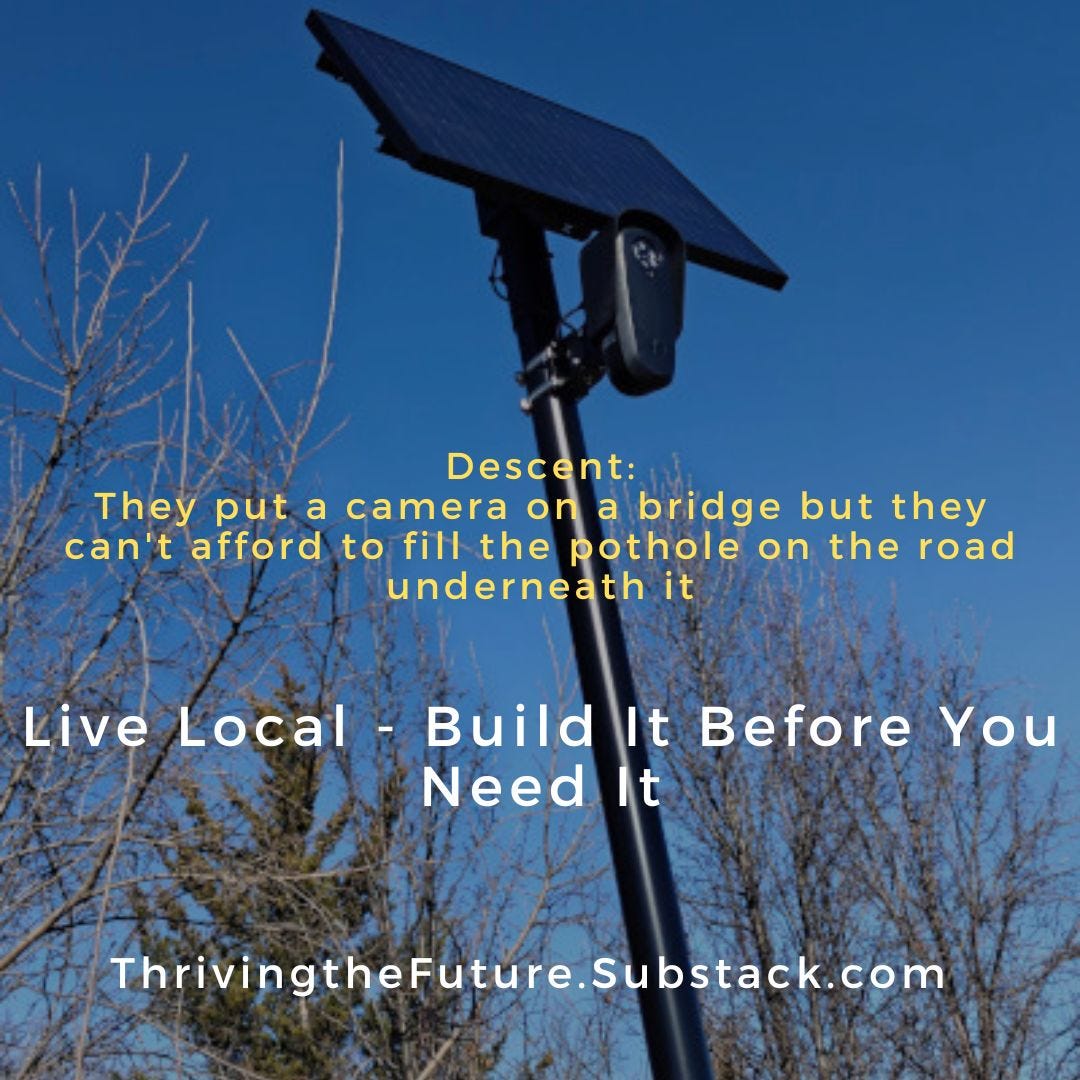
I don’t know when it went up. I just noticed it one morning. And now its presence is felt every morning.
Why there? Why now? What are they doing with that data? Who asked for it? I’m not sure who ordered it, because the County Commission doesn’t include stuff like that in their meeting notes. It just appeared, the way these things do - quietly, from somewhere else, pointed at you.
That camera is a picture of how everything works now. Decisions made far away, pushed down to my road, and we find out after the fact. That’s centralization. It didn’t knock on my door first (not that they would have listened).
What happens when the money runs out
I’m re-reading a book called Surviving the Future by David Fleming. My podcast is named after it - that’s how much this book shaped my thinking.

I keep coming back to this truth:
“As the industrial economy descends, unemployment will rise, and there will come a point when government revenues are so deeply reduced that funds are not there to support the unemployed or to pay for such fundamentals as education, health and law and order. Households and communities will find it hard, bordering on impossible, to pay their way. Such necessities as food and even water supplies could be hard to get. Communities will therefore have to provide these things for themselves, or do without. They will need to rediscover their locality and local skills, rebuild a culture, and apply the power of lean thinking; sharply focused, widely shared.”
The federal government is famously broke and state governments are not far behind. The money gets tighter every year. They can put a camera on a bridge but they can’t seem to fill the pothole on the road right underneath it (oh, that is a different government contract). At some point the math stops working and communities need to figure it out locally.
I think about this every time I drive past that camera.
Descent, not collapse
People hear this and jump straight to collapse. That’s not what I’m talking about. It’s descent - a slow, messy gray area where services just quietly stop working and nobody makes an announcement about it.
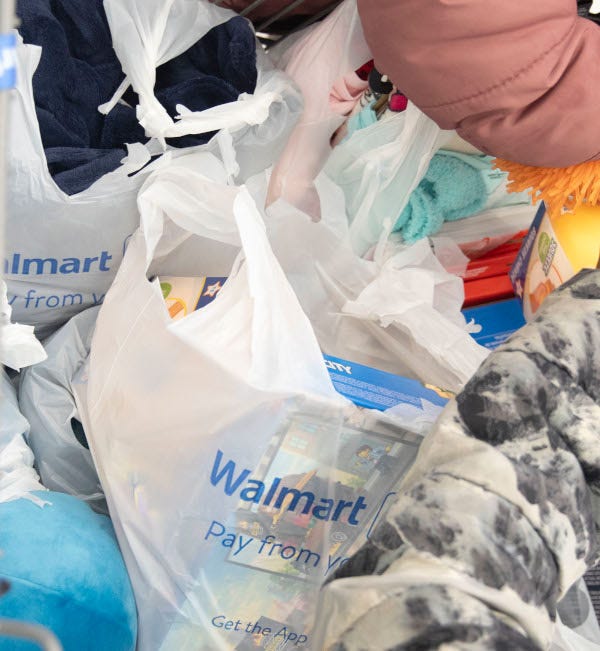
Perpend ordered groceries from Walmart. The deliveries were always wrong. Not just sometimes - Always.
So a community sprang up. People in his apartment complex started trading what they didn’t want for what their neighbors didn’t want.
Nobody called it localism. They just traded what they needed.
That’s what descent looks like. It’s not a dramatic event, just the services getting a little thinner, a little less reliable, until people go and figure it out with whoever’s nearby. That’s messy localism. And it’s already happening.
What I tried
In the early days of Thriving the Future - right around Covid - we actually did something about this. We ran monthly workshops. Skills Over Stuff, in person. No experts, just people showing up and sharing what they knew. Processing chickens, making vinegar, sharpening a chainsaw, setting up Linux. The whole point was “I’m not an expert but we’re still going to Get Stuff Done.”
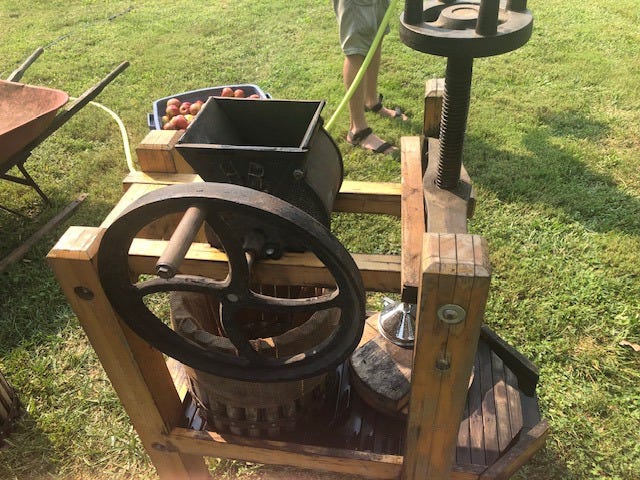
It worked - for awhile. People came out and they learned real things from each other. It felt like what Fleming was describing - local skills with local folks sharing them.
Then Covid restrictions lifted and people went back to normal life - back to their screens. The workshops faded out. Some people wanted the community - but only on a Telegram group, which is just social media with a different name. We somehow traded showing up in person and doing things with your hands for a group chat.
I’m not bitter about it, but I notice it. When the pressure let up, people chose the easier thing. Local life is harder than screen life. That’s just true.
What I’m still doing
The workshops faded but the work didn’t.
I grow chestnut trees in Kansas from seed, from trees that already survived here. Seeds have a memory - they remember the place they came from. A chestnut that made it through Kansas winters and Kansas summers and Kansas clay soil passes that knowledge down to its seedlings. That’s not a metaphor, it’s real life. And it only works because the trees are local.
I call them Midwest Memory trees. They’re grown and adapted to the Midwest - not just zone-matched on paper from somewhere else. My whole nursery is built on this idea that where a tree comes from matters as much as where it’s going.
That’s Fleming’s localism in one tree.
When someone asks me “How goes the struggle?” - and that’s a real question in my world, not just small talk - it opens up a different kind of conversation. Not “fine, how are you?” but the actual thing. What’s hard right now. What’s working. What they’re trying to figure out. That’s the community piece, and it doesn’t need a workshop or a Telegram group. It just needs two people being honest over a table.
Live Local
That’s our challenge: Live Local. Yours, mine, and ours. Before it is chosen for us.
Not just buy-local-bumper-sticker local. Live it. Your trees, your seeds, your food, and your skills. Your local (not online) community. Your news. The way you learn, the people you learn from, the things you build and who you build them with.
Fleming called it “rediscovering local self-reliance.” I think of it as the opposite of that Flock camera - instead of solutions pushed down from far away, solutions grown right where you are. Seeds that remember your place. Skills shared between neighbors. Food we grow in soil we know. Eating local, even if the fruit is a little blemished or the radish is super spicy because of the soil. And community built around a table, not a feed on a screen.
Build your local connections now so you don’t have to scramble to do it later.
I’m not pretending I have this all figured out. I tried it and it worked under pressure, and when the pressure lifted people went back to screens because they still could. That option won’t last forever. The workshops were the proof of concept - not the failure.
Some days the Flock camera laughs at me; feels like it’s winning.
But the trees are still growing. I’m still grafting Asian pears onto the Callery pears that Kansas can’t kill. I’m still planting chestnuts that remember this place. And when I sit across from someone and ask “How goes the struggle?” - it still makes people stop and think and we explore the real answer together.

One small thing you can do right now, right where you are: ask someone “How goes the struggle?” this week. Not “How are you?” - that just gets you “fine.” Ask the real question. See what happens.
I’m a guy in Kansas who grows chestnut trees and writes about building a real life instead of borrowing one.
Skills Over Stuff. Plant trees, Grow Food, Build community.
Join me. Let’s Thrive Together.
I grow chestnuts in Kansas. Why? Because the chestnuts I bought from elsewhere struggled or died. Now I collect local chestnut seeds and grow them into seedlings. I sell the extras that I don’t use. If you want Midwest Memory trees that will survive in Midwest Zones 5 -7, go to Grow Nut Trees.
